The stall, built: one counter in code (load balancing, health checks and caching in Go)
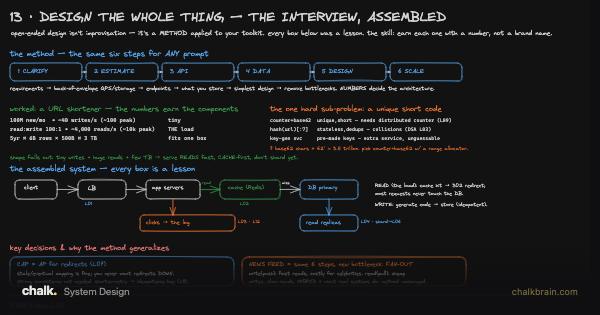
The whiteboard where every box had to be paid for by a number. This lesson takes three of those boxes, the gate, the slate and the rail, and writes them as one small program you can run on a laptop.
Before you start. You need the chai stall from The chai stall that got famous (load balancing): one famous stall became three, and a man at the gate sends each customer to one of them, which is a load balancer. You need the slate from The slate next to the stove (caching), a small board by the stove that remembers answers so the wala does not walk to the back room every time, which is a cache. You need the rail from The order slip rail (queues & the utilization cliff), a wire of paper slips that lets the counter take an order now and cook it later, which is a queue. Design the Whole Thing (the interview, assembled) put all three on one whiteboard; this lesson turns that whiteboard into code.