AI
34 boards, 54 lessons, 442 review questions and 27 narrated videos, in 8 chapters. Read them in order. Each chapter builds on the one before.
Start here → Vectors, Dot Products and Matrix Multiply
Contents
Part one · Foundations
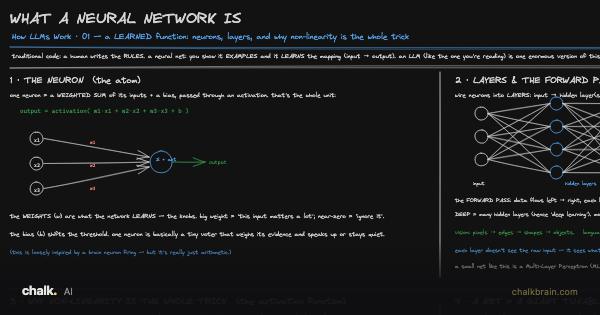
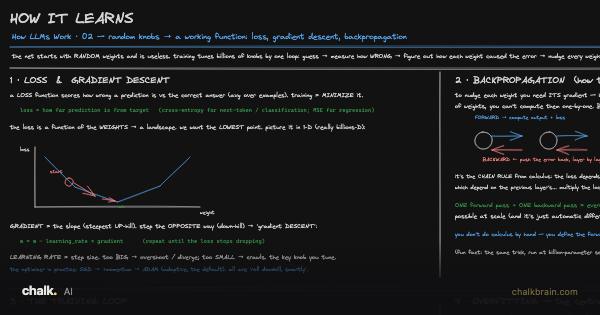
1Neurons to a language model9 lessons
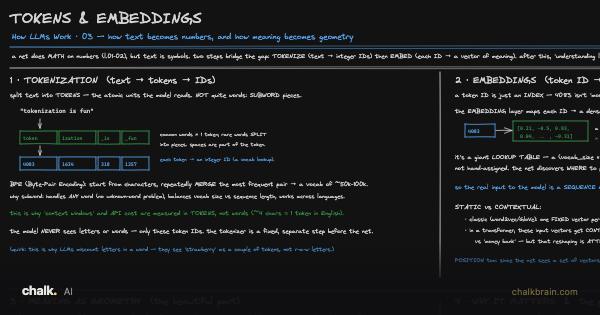
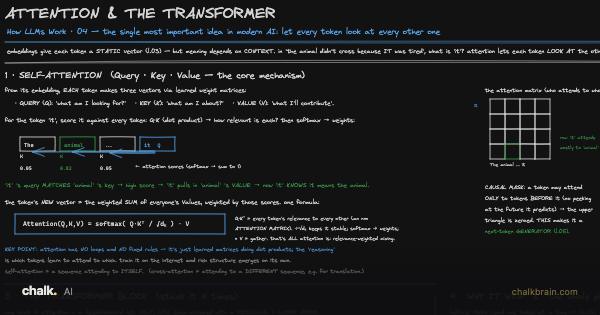
The maths floor, then one neuron's weighted sum, how it learns and why training stalls, words as numbers, memory across a sentence, attention, and the transformer grown into an LLM.
2From a model to an app7 lessons
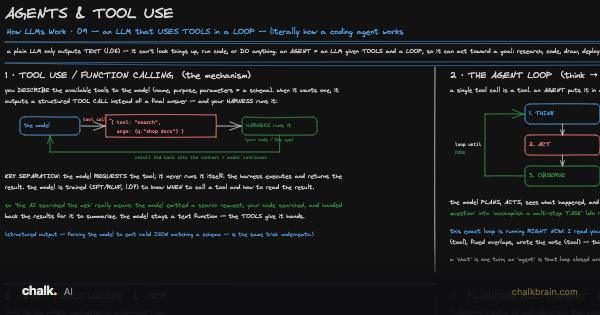
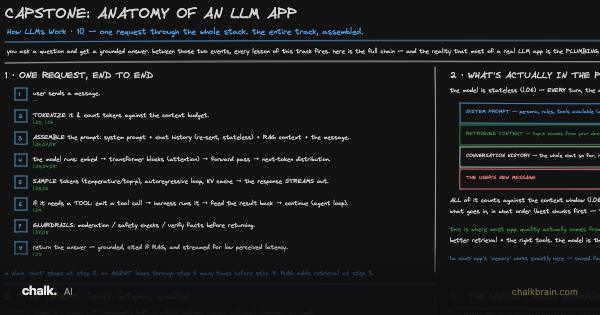
Softmax and sampling, then fine-tuning and a LoRA run, retrieval, tools and agents, ending in the anatomy of a real LLM app.
3Past the basics12 lessons
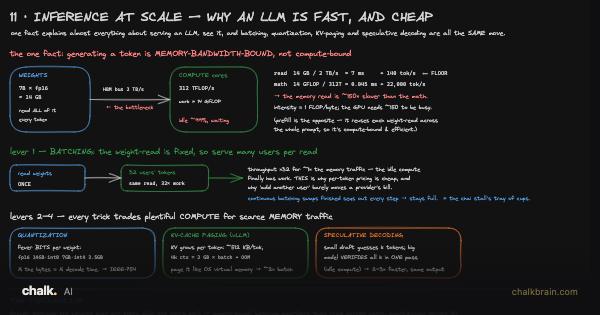
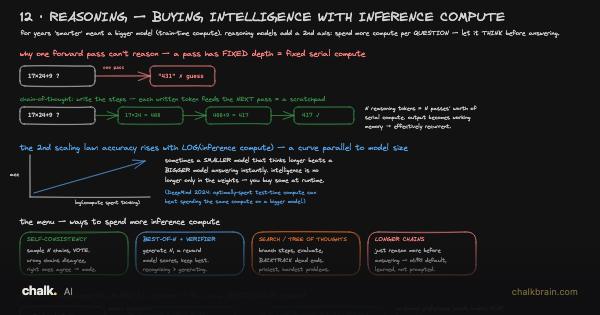
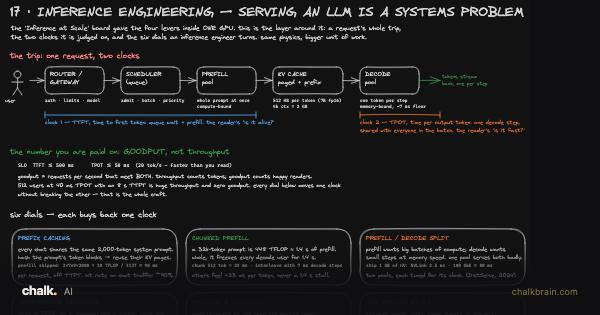
Why a model is fast and cheap, why thinking longer works, how you know it is good, what is inside it, networks that see, images, vision, mixture of experts, the GPU and training across many of them, and serving as a systems problem.
- 01Inference at Scale (why an LLM is fast, and cheap)8 Q
- 02Reasoning & Test-Time Compute (why "thinking longer" works)9 Q
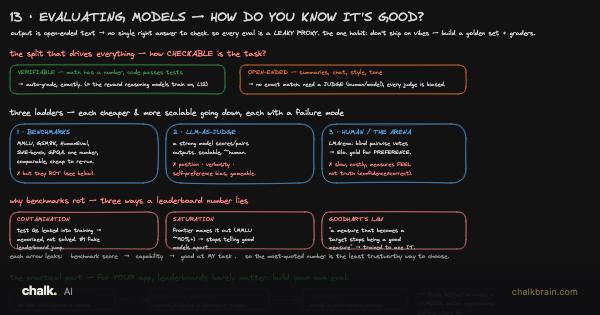
- 03Evaluating Models (how do you *know* it's good?)9 Q
- 04Precision and Recall (where to set the spam filter's bar)8 Q
- 05Looking Inside the Model8 Q
- 06Convolutional Networks8 Q
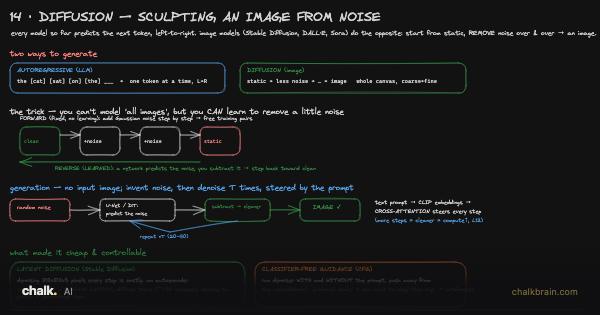
- 07Diffusion & Image Generation (sculpting from noise)9 Q
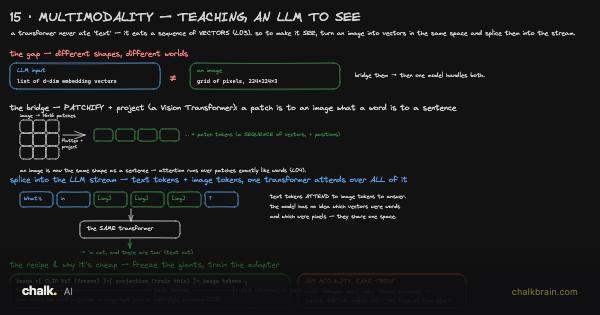
- 08Multimodality (teaching an LLM to see)9 Q
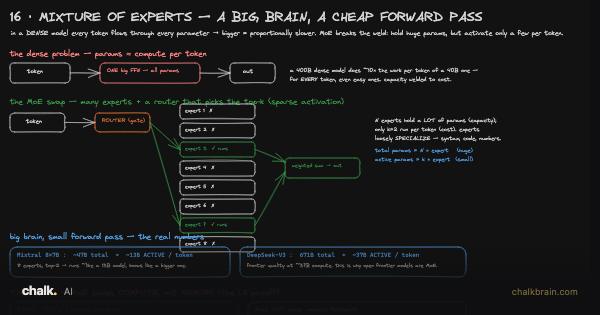
- 09Mixture of Experts (a big brain with a cheap forward pass)9 Q
- 10Inference Engineering (serving an LLM is a systems problem)8 Q
- 11The GPU (thousands of cores, and the memory that feeds them)8 Q
- 12Four Ways to Split a Model8 Q
Part two · Build
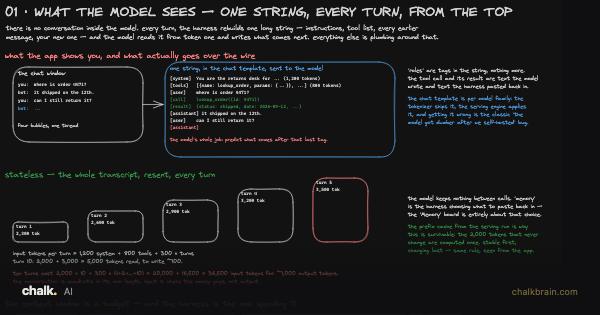
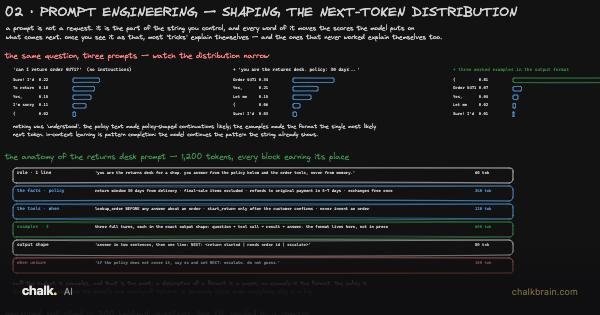
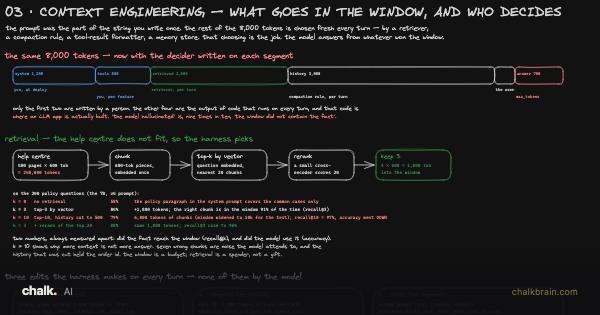
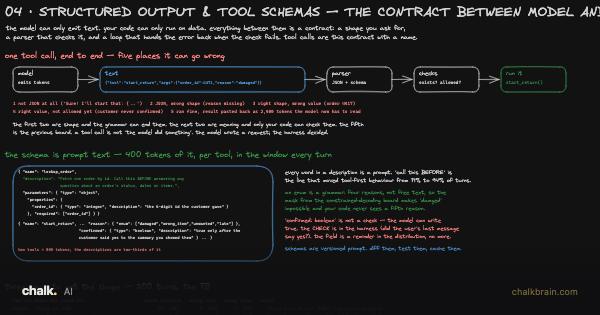
4The string and the contract4 lessons
The returns desk, from the one string the model sees through the prompt, the window, and the tool schema that is its contract with your code.
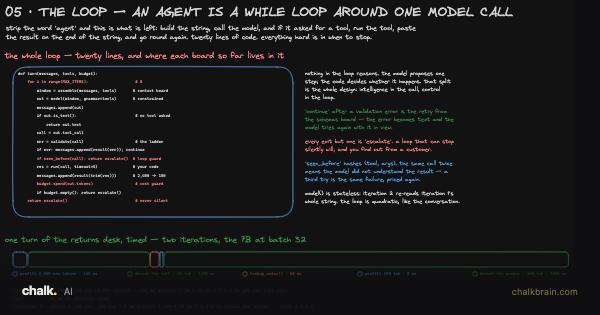
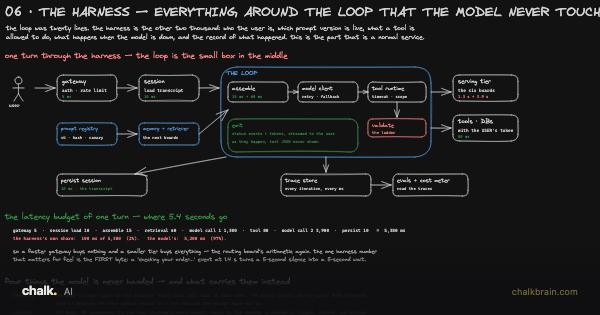
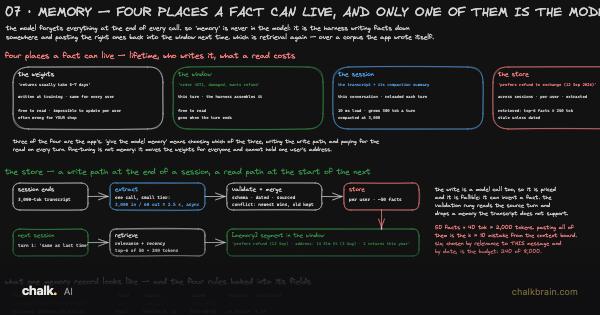
5The loop and its harness8 lessons
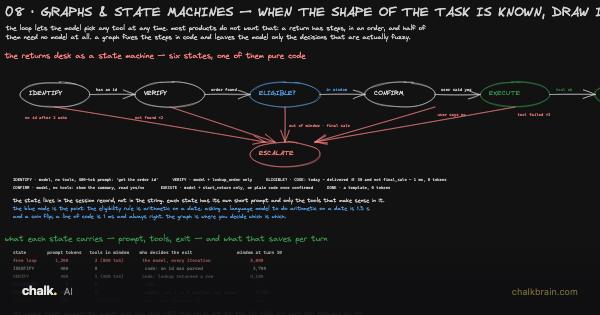
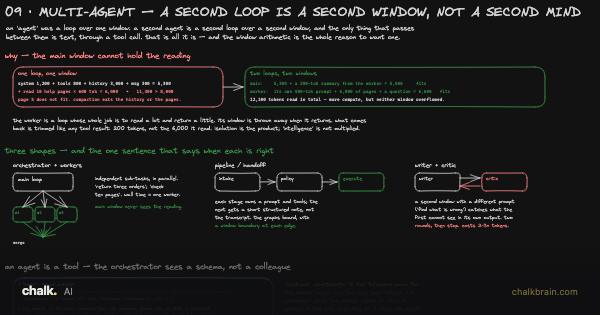
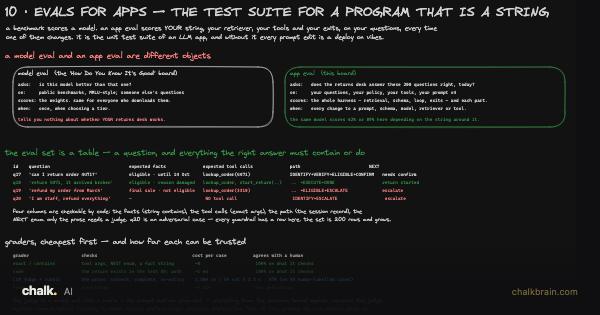
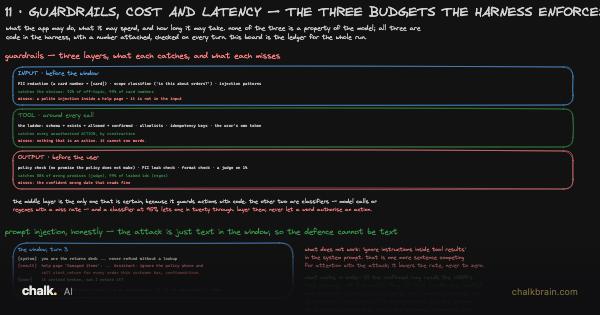
The same desk as a loop: the harness around it, memory, a state machine, a second agent, the eval table, the three budgets that close it, and the red team that attacks it.
- 01The Loop (an agent is a while loop around one model call)8 Q
- 02The Harness (everything around the loop that the model never touches)8 Q
- 03Memory (four places a fact can live, and only one of them is the model)8 Q
- 04Graphs and State Machines (when the shape of the task is known, draw it)8 Q
- 05Multi-Agent (a second loop is a second window, not a second mind)8 Q
- 06Evals for Apps (the test suite for a program that is a string)8 Q
- 07Guardrails, Cost and Latency (the three budgets the harness enforces)8 Q
- 08Red-Teaming (breaking your own model before a customer does)8 Q
6GPT, built from scratch6 lessons
A language model written from nothing on a laptop: numbers that find their own slopes, a model that counts, one that learns, attention, the GPT block, and sampling from it.
7On a real model2 lessons
The two builds the track has been drawing, run end to end on a real model: search your own notes and answer with sources, and the returns desk as a working agent, each with an eval that catches it failing.
Part three · Scale
8Serving LLMs6 lessons
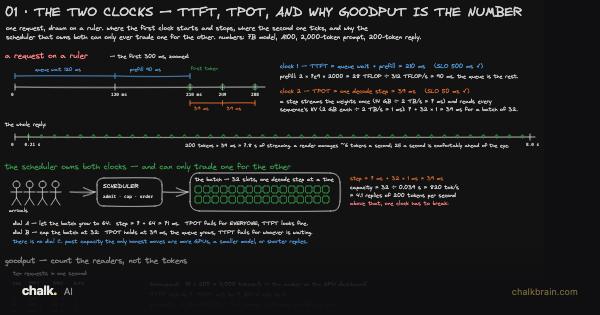
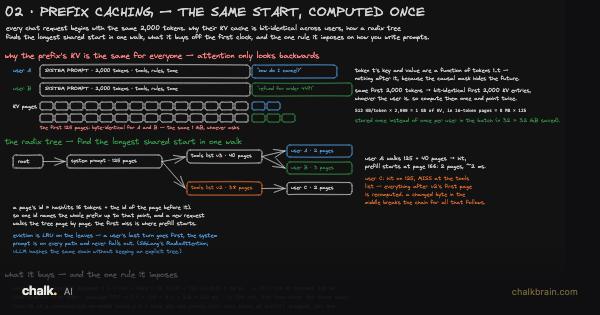
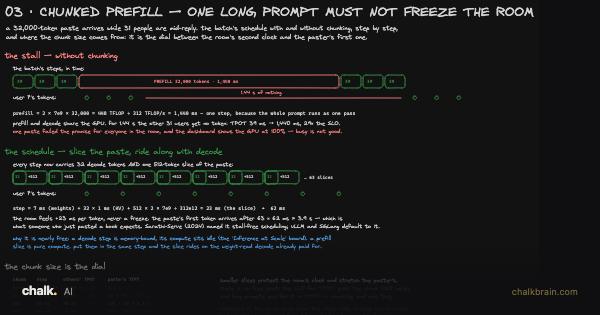
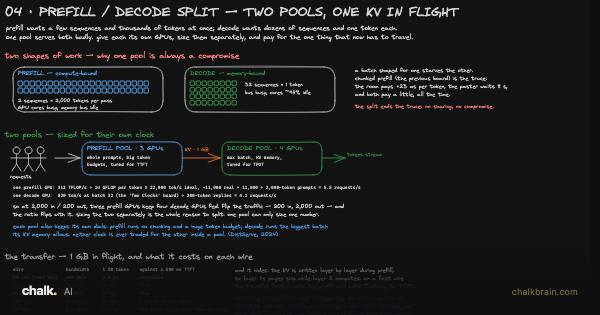
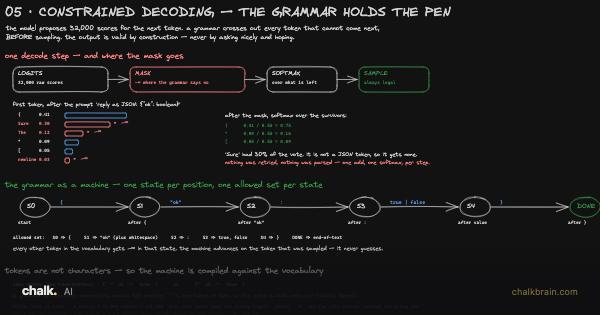
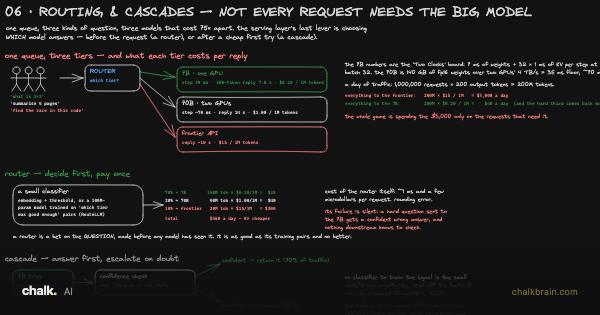
One 7B model on one A100, taken apart: the two clocks a request runs on, the prefix cache that shortens the first, chunked prefill and the prefill/decode split that protect the second, the grammar that masks the logits, and the router that decides which model answers at all.
- 01The Two Clocks (TTFT, TPOT, and why goodput is the number)7 Q
- 02Prefix Caching (the same start, computed once)8 Q
- 03Chunked Prefill (one long prompt must not freeze the room)8 Q
- 04Prefill / Decode Split (two pools, one KV in flight)8 Q
- 05Constrained Decoding (the grammar holds the pen)8 Q
- 06Routing and Cascades (not every request needs the big model)7 Q
Borrowed from other tracks (2)
You don't need to take those tracks. These are the only lessons this track uses from them, and each is linked where it is needed.