The Statistic That Reverses Itself
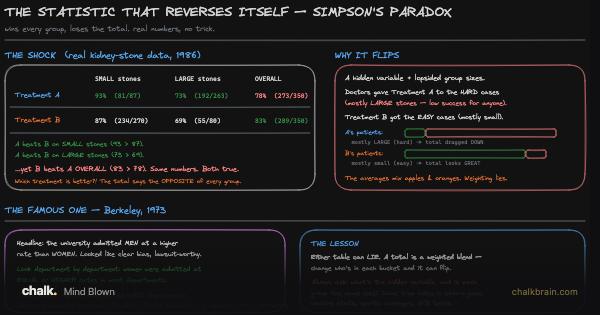
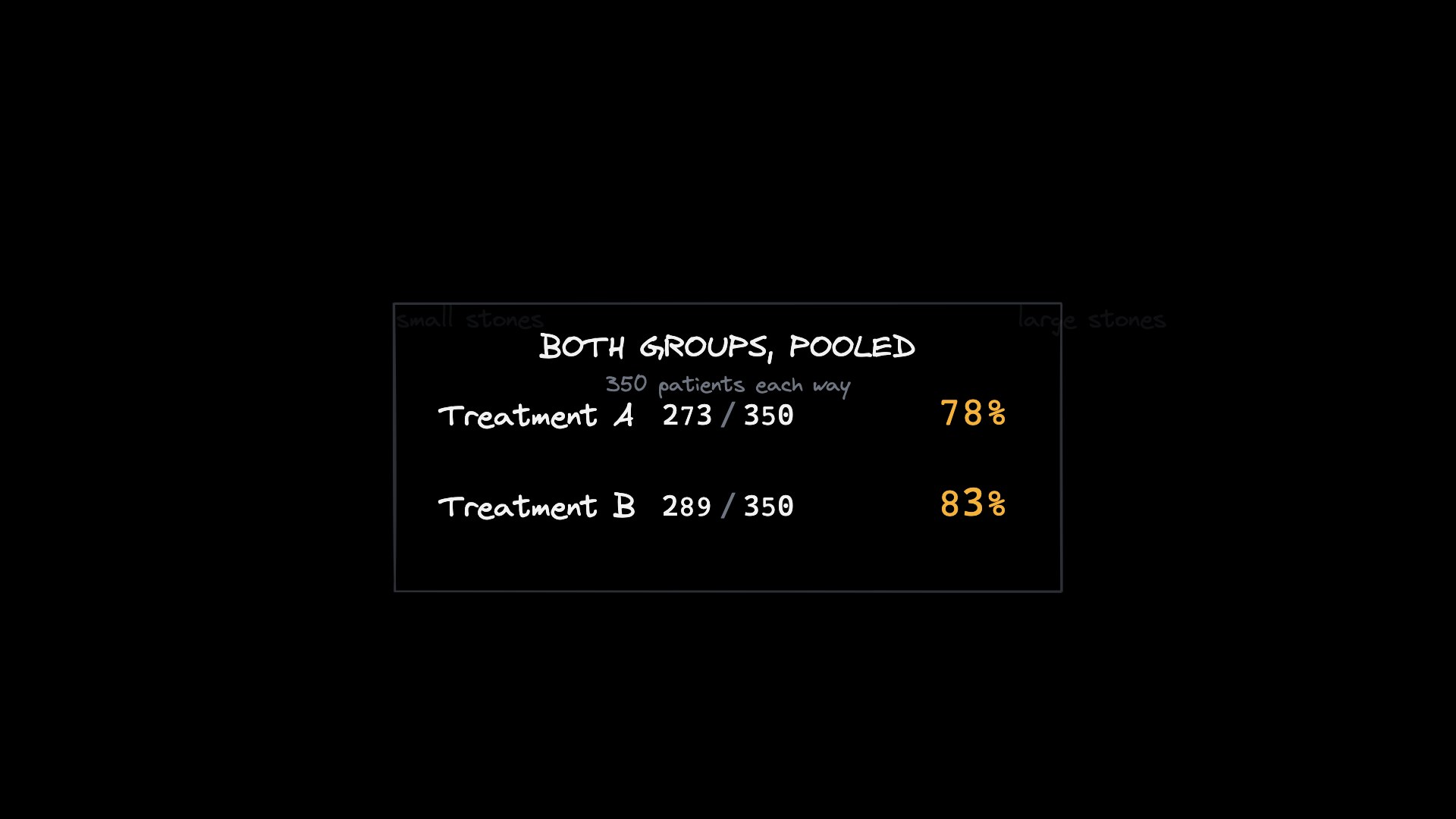
A table of numbers splits into two groups, each one favouring a different choice, then the two groups get poured back into a single row that favours the opposite choice. Both the split and the combined row are worked out correctly, no error anywhere. The board offers one explanation for how that can happen: a hidden factor pulling on the split and the total at once. That explanation turns out to be exactly right for one of the two real cases below, and too simple for the other - and the difference between those two is the actual subject of this lesson.
Before you start. You need to be able to read a percentage - 82 admitted out of 100 applicants is 82%, nothing more. Everything else in the first half is people, dates, and things that actually happened.