Multi-Agent (a second loop is a second window, not a second mind)
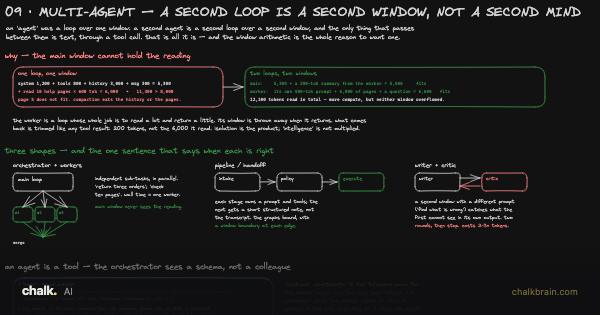
Building with LLMs. The last board, Graphs and State Machines (when the shape of the task is known, draw it), drew the returns desk as one loop with a napkin of boxes. This one, Multi-Agent, asks what happens when that one loop runs out of room, and prices the answer instead of guessing at it: the same ten-page question worked once with one loop and once with two, three shapes a second loop can take, and four ways two loops go wrong.
A large language model, an LLM, answers by predicting the next word from the text it can see at that moment. Picture one running a shop’s returns desk, able to look up an order and start a return, all from inside that one block of text.
Before you start. The assistant at this desk is a support clerk for an online shop’s returns desk. It can see only one block of text at a time: everything said so far, plus anything it has looked up. This lesson calls that block its window. When it needs a fact the window doesn’t hold, it writes a short request, “look up order 4471”, and code runs that request and pastes the answer back in. That request and the answer it brings are a tool call. It reads, decides, asks, reads again, until it can answer, and that repeating is its loop. A clerk running that loop is an agent. This lesson is about what happens when the help it asks for needs a window as big as its own.