DP, five more shapes
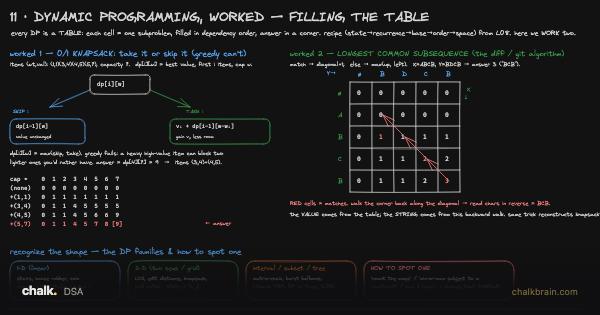
Shows two grids filled by hand, each cell built from cells already filled, the answer waiting in a corner. This lesson keeps that rule and changes what a single cell means.
Before you start. Recursion & Dynamic Programming gave you the trick: answer each small copy of a question once, write it in a notebook, and build bigger answers from notebook entries instead of solving them again. That notebook can be one row (the ways to reach step n are the ways to reach n-1 plus the ways to reach n-2), and Dynamic Programming, Worked (filling the table) filled it as two grids, knapsack and LCS, where a subsequence means items kept in their order with gaps allowed.