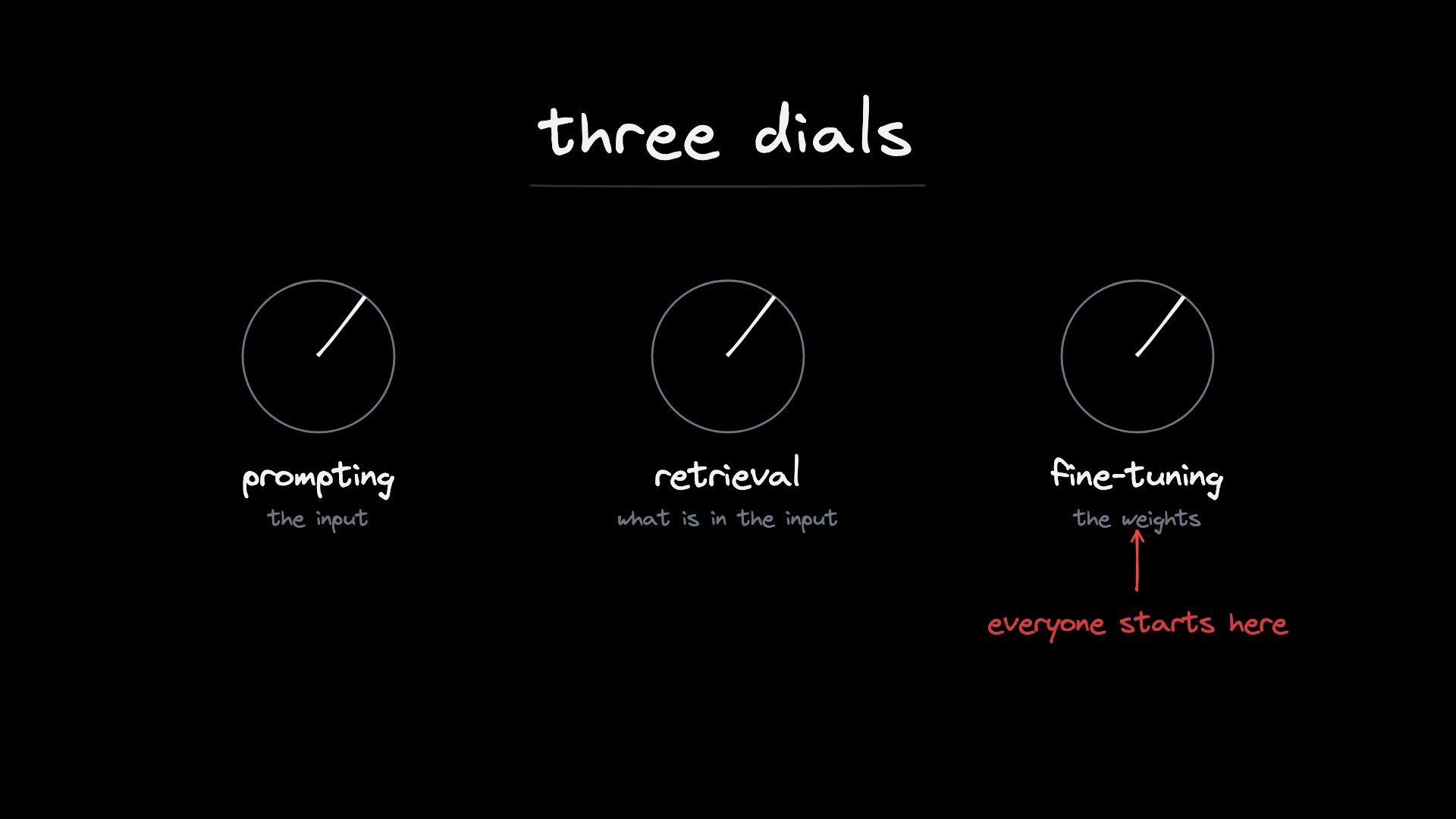
A LoRA Run
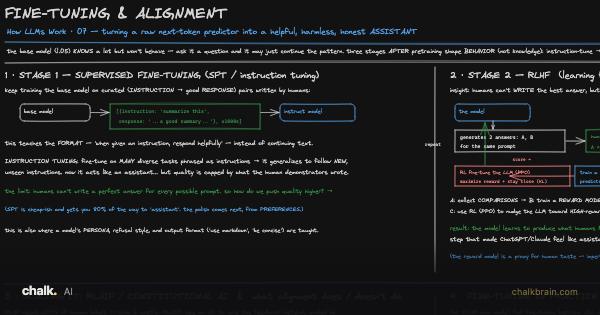
The Fine-tuning and Alignment board draws how a model that finishes text becomes one that answers. This lesson runs its cheapest tool on a real job: what it costs, what to feed it, and how to tell it worked.
Before you start. A weight is one adjustable number inside a model, and the loss is one number for how wrong it is; training nudges the weights to shrink the loss, as How It Learns (loss, gradient descent, backprop) showed. A layer is a grid of weights, called a matrix, that the input is multiplied by, as Vectors, Dot Products and Matrix Multiply showed. A 7B is a model with seven billion weights, and an A100 is NVIDIA’s 80 GB data-centre GPU. Fine-tuning is a second, small round of training on examples of one job; it changes how a model behaves and adds no facts, as Fine-tuning & Alignment showed. Adam, the standard training method, keeps two extra numbers for every weight it trains, as Why the Loss Won't Go Down showed. The returns desk is an online shop’s support assistant running on a 7B; What the Model Sees (one string, every turn, from the top) builds it in full later.